
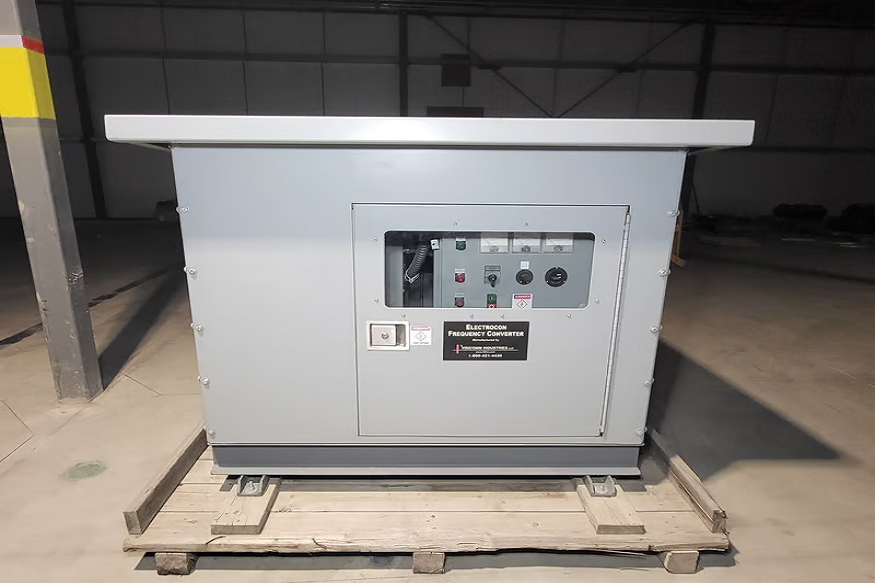
The landscape of modern manufacturing is defined by a relentless pursuit of precision, speed, and energy efficiency. As factories transition from manual processes to fully integrated, automated ecosystems, the demand for stable and adaptable power has never been greater. At the heart of this technological shift lies a critical component that often goes unnoticed by the casual observer:Visicomm Industries solid state frequency converters. Unlike traditional mechanical methods of power conversion, these electronic powerhouses offer a level of control and reliability that has become the backbone of high-tech production lines, specialized testing facilities, and global logistics hubs.
The Evolution from Mechanical to Solid-State Technology
For decades, the primary method for changing the frequency of an electrical power supply involved rotary converters—large motor-generator sets that used physical rotation to bridge the gap between different power standards. While robust, these mechanical systems were limited by their size, noise, and the inevitable wear and tear of moving parts. The advent of solid-state technology revolutionized this process by utilizing semiconductor devices, such as Insulated Gate Bipolar Transistors, to convert electricity without any moving components.
A solid-state frequency converter operates through a multi-stage electronic process. It first takes the incoming alternating current from the utility grid and rectifies it into direct current. This energy is then filtered and passed into an inverter stage, where it is reconstructed into a brand-new alternating current signal at the precise frequency and voltage required by the industrial equipment. This purely electronic conversion allows for near-instantaneous adjustments and a level of output purity that mechanical systems simply cannot achieve.
Precision Control in Automated Manufacturing
In the world of industrial automation, precision is the primary currency. Robotic arms, high-speed conveyors, and synchronized assembly lines require motors to operate at exact speeds to maintain the integrity of the production process. Solid-state frequency converters provide the fine-tuned control necessary to achieve this. By manipulating the frequency of the power supply, these devices allow operators to dictate the rotational speed of alternating current motors with extreme accuracy.
This level of control is particularly vital in applications such as CNC machining or semiconductor fabrication, where even a microscopic deviation in motor speed can result in a defective product. Because solid-state converters can adjust their output in real-time based on feedback from the automation system, they allow for dynamic speed changes that follow the complex requirements of modern manufacturing software. This responsiveness ensures that the hardware can keep pace with the digital instructions driving the factory floor.
Energy Efficiency and System Protection
Beyond mere conversion, solid-state frequency converters act as a protective barrier for expensive industrial machinery. The electronic conversion process naturally filters out line noise, voltage spikes, and harmonic distortions that are common in industrial power grids. By providing a clean, stable sine wave to the connected load, the converter reduces the thermal stress on motor windings and electronic controllers, significantly extending the lifespan of the equipment it powers.
Energy efficiency is another hallmark of solid-state design. Because there are no friction losses from bearings or windage losses from rotating fans, solid-state converters operate at a much higher efficiency than their rotary counterparts. Many modern units also feature regenerative braking capabilities, where the energy generated by a slowing motor is captured and fed back into the system rather than being wasted as heat. This contributes to a lower overall carbon footprint and reduced operational costs for the facility.
Conclusion
The transition toward total industrial automation is a journey of a thousand small parts, but few are as fundamental as the solid-state frequency converter. By providing the clean, precise, and adaptable power that modern machines crave, these devices have enabled a level of manufacturing complexity that was once the stuff of science fiction. They bridge the gap between different global standards, protect sensitive assets from the irregularities of the utility grid, and provide the data needed to drive the next generation of industrial intelligence.